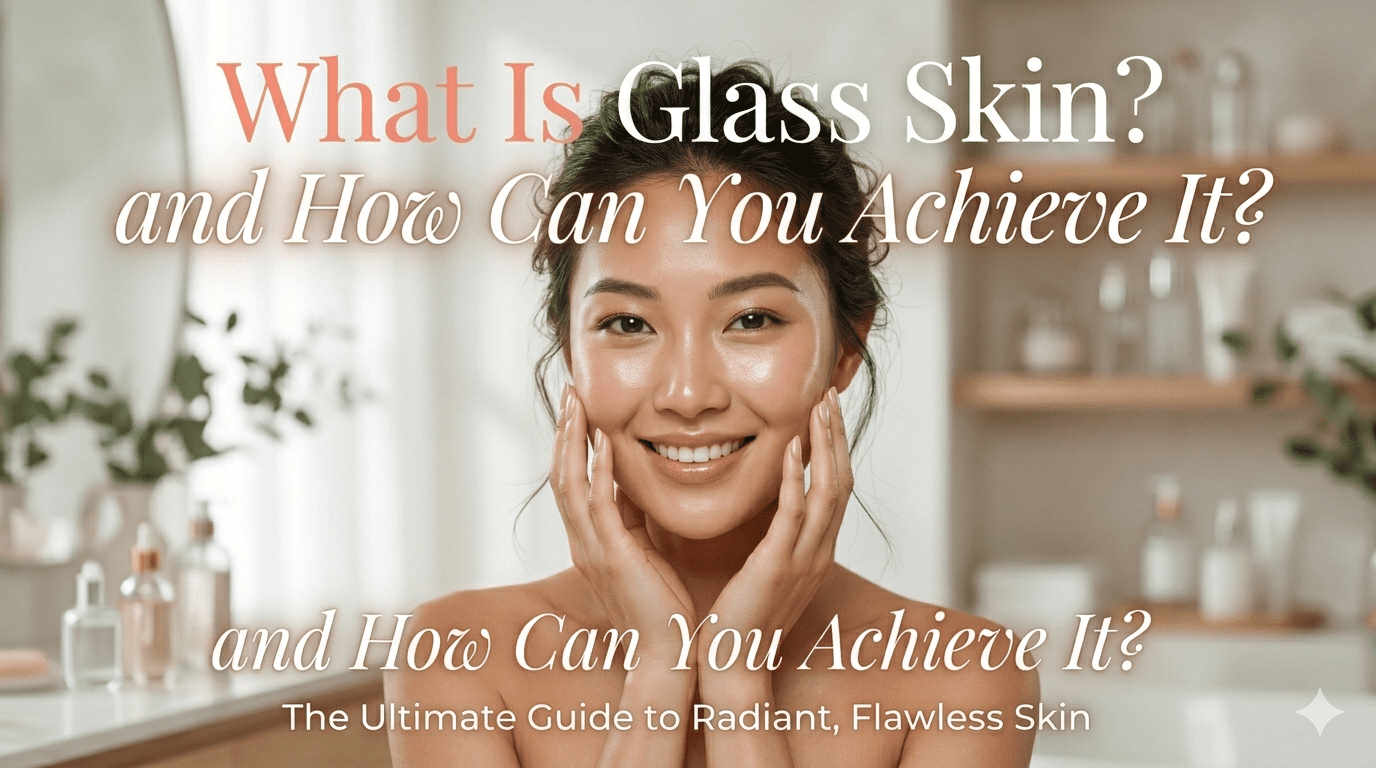
If you’ve spent any time on skincare social media in recent years, you’ve seen it: that impossibly smooth, luminous, almost reflective complexion that seems to glow from the inside out. No visible pores. No dullness. Just clear, dewy, translucent skin that looks like polished glass.
That’s glass skin, and it’s one of the most searched beauty trends of the past decade. Rooted in Korean skincare philosophy, it has spread well beyond K-beauty communities to become the defining aesthetic of modern skincare. But what does glass skin actually mean, is it realistic, and can someone with oily, acne-prone, or mature skin actually achieve it?
Here’s everything you need to know.
What Is Glass Skin?
Glass skin is a term from the Korean beauty world describing a complexion so smooth, hydrated, and even-toned that it appears almost translucent, like a sheet of clear glass. The skin reflects light cleanly rather than scattering it, which creates that signature lit-from-within luminosity.
It’s important to be clear about what glass skin is not. It isn’t:
- Shiny or oily skin (excess sebum causes a greasy surface reflection, not the same as glass skin glow)
- Flawless skin achieved through filters or makeup coverage
- A skin type you’re either born with or not
Glass skin is a skin condition: the result of optimal hydration, a strong moisture barrier, minimal inflammation, and consistent cell renewal. At its core, it describes skin functioning at its healthiest. The aesthetic follows naturally from that function.
Dermatologists frame glass skin in terms of three underlying factors: deep hydration levels, barrier integrity, and minimal surface texture disruption. When all three are working well, skin naturally takes on that smooth, luminous quality.
Can Anyone Achieve Glass Skin?
Yes, with honest expectations. Dermatologists and skin professionals widely agree that all skin types and all skin tones can work toward glass skin, though the approach and timeline will differ based on your starting point, genetics, and lifestyle.
What varies is how much of that glass-like appearance is achievable for you specifically. Genetics influence your baseline pore size, sebum production, and skin thickness. Someone with naturally fine pores and balanced sebum has a shorter route to the look. Someone with congested, acne-prone, or hyperpigmented skin will get there through a longer journey of consistent care.
The social media version of glass skin, often photographed in professional lighting with ring lights and sometimes edited, is worth treating as directional inspiration rather than a literal benchmark. The goal is the healthiest, most hydrated version of your own skin, not someone else’s.
The Science Behind the Glow
Understanding what creates the glass skin appearance helps you target your routine more effectively.
Skin hydration. Well-hydrated skin cells are plumper, which smooths the skin’s micro-surface texture. Light bouncing off a smooth, even surface reflects uniformly, creating that luminous, almost glassy appearance. Dehydrated cells shrink and create micro-surface irregularities that scatter light instead of reflecting it, producing dullness.
Barrier function. The skin barrier (stratum corneum) is the outermost layer of skin, made up of dead skin cells embedded in a lipid (fat) matrix often compared to bricks and mortar. A healthy barrier prevents water from evaporating out of the skin (transepidermal water loss, or TEWL) and keeps irritants from getting in. When the barrier is intact, the skin holds its moisture and maintains the smooth, plump appearance associated with glass skin. A damaged barrier leads to dehydration, redness, sensitivity, and the flaky, uneven texture that is the opposite of the glass skin look.
Cell turnover. Dead skin cells that accumulate on the surface create texture, dullness, and uneven tone. Gentle, consistent exfoliation supports the skin’s natural shedding process, revealing the fresher, more even skin underneath and allowing hydrating products to penetrate more effectively.
Even tone. Hyperpigmentation, active inflammation, and redness disrupt the clarity that glass skin requires. Addressing these through targeted ingredients (niacinamide, vitamin C, gentle acids) contributes significantly to the overall appearance.
The Key Ingredients for Glass Skin
Before getting into the routine, it helps to understand the ingredients that do the actual work. Glass skin is built on a relatively focused ingredient set.
Hyaluronic acid. The primary humectant for glass skin. It draws water into the skin and holds it there, creating the immediate plumping and surface smoothing that most closely approximates the glass skin look. Use multi-weight formulas for surface and deeper-layer hydration, and always apply to damp skin.
Glycerin. Alongside hyaluronic acid, glycerin is one of the most effective hydrating ingredients available. Its smaller molecular size allows it to penetrate deeper into the stratum corneum, providing sustained moisture that outlasts HA’s more immediate surface effect. Most well-formulated moisturisers include glycerin as a core ingredient.
Ceramides. Ceramides are lipids naturally present in the skin barrier. Topical ceramides replenish the barrier’s mortar layer, reducing water loss and supporting the structural integrity that keeps skin plump and smooth. Essential for anyone with dry, sensitive, or barrier-compromised skin.
Niacinamide (Vitamin B3). Addresses multiple glass skin concerns simultaneously: regulates sebum, minimises pore appearance, reduces redness and hyperpigmentation, strengthens the barrier, and supports an even, clear skin tone. One of the most versatile ingredients in the glass skin toolkit.
AHAs (Glycolic or Lactic Acid). Gentle chemical exfoliants that remove dead skin cell build-up from the surface, improve texture, and brighten overall tone. Lactic acid is particularly suited to glass skin routines because it both exfoliates and hydrates simultaneously.
Vitamin C. An antioxidant that neutralises free radical damage, inhibits melanin production to fade dark spots, and supports collagen synthesis. The brightening and tone-evening effects of vitamin C are particularly relevant to the clarity component of glass skin.
Galactomyces Ferment Filtrate. A widely used K-beauty essence ingredient (found in SK-II’s famous Pitera Essence and numerous affordable alternatives) derived from yeast fermentation. It improves skin texture, radiance, and overall tone through a complex of vitamins, amino acids, and minerals.
Centella Asiatica (Cica). A plant extract with strong soothing and barrier-repairing properties. Particularly useful for sensitive skin or anyone dealing with redness and irritation that disrupts the even tone glass skin requires.
Peptides. Signal proteins that support collagen production and skin firmness. Particularly relevant for mature skin pursuing glass skin, where loss of firmness and elasticity are additional factors.
The Glass Skin Routine: Step by Step
Glass skin is built through layering: multiple lightweight, hydrating products applied in a specific order that builds moisture at different depths. The K-beauty principle of layering thinner products first and sealing with thicker ones is core to this approach.
Step 1: Double Cleanse (Evening)
Double cleansing is a cornerstone of the glass skin routine and the step most Western routines skip. It involves two sequential cleansers with different roles.
First cleanse with an oil-based cleanser or cleansing balm. Oil dissolves the oil-based residues that water-based cleansers struggle with: sunscreen, makeup, and excess sebum. Apply to dry skin, massage gently, emulsify with water, and rinse.
Second cleanse with a gentle, water-based cleanser to remove any remaining residue and clean the skin without stripping it. The skin should feel clean and comfortable after, never tight, dry, or squeaky.
In the morning, a single rinse with water or a very gentle cleanser is sufficient for most skin types, as overnight skincare products don’t require the same level of cleansing.
Step 2: Exfoliate (Two to Three Times per Week)
Glass skin requires smooth, even surface texture. Gentle chemical exfoliation, two to three times per week, supports the cell turnover that delivers this.
For glass skin specifically, lactic acid (5% to 10%) is the most aligned choice: it exfoliates and hydrates simultaneously, and its moderate penetration is less likely to disrupt the barrier you’re trying to build. Glycolic acid is more potent and faster-acting for those whose skin tolerates it. For sensitive skin, mandelic acid is the gentlest option.
Do not over-exfoliate. Stripping the surface in pursuit of glass skin is one of the most common mistakes. It damages the barrier, causes inflammation, and produces the opposite of what you’re after. Twice a week is sufficient for most people.
Step 3: Hydrating Toner or First Essence
After cleansing, apply a hydrating toner or first essence to damp skin. This step serves two purposes: it begins the hydration layering process and primes the skin to absorb subsequent products more effectively.
K-beauty toners at this stage are nothing like the alcohol-based astringents of earlier decades. Modern hydrating toners are light, watery formulas packed with humectants and gentle actives. Apply by gently patting into the skin (the pat method rather than wiping is preferred in glass skin routines as it doesn’t disturb the surface).
The “7 skin method” is a popular K-beauty technique that involves applying multiple thin layers of a hydrating toner in sequence, with each layer absorbed before the next is added. It’s a useful approach for very dry or dehydrated skin seeking to maximise hydration.
Step 4: Essence
An essence is a distinctly K-beauty product category that sits between toner and serum in texture. It’s lighter than a serum but more concentrated than a toner, typically focused on hydration and radiance.
Essences often contain fermented ingredients (galactomyces, bifida ferment lysate), centella asiatica, snail secretion filtrate, or hyaluronic acid as primary actives. They add another layer of hydration and targeted treatment before the serum step. Apply with gentle patting motions.
This step can be simplified or skipped if your routine already includes a treatment serum, but for a dedicated glass skin routine, the essence layer meaningfully contributes to the overall hydration build-up.
Step 5: Targeted Serum
This is where you address your specific skin concerns: brightening, pigmentation, barrier support, anti-ageing, or pore refining.
Key serum choices for glass skin goals:
- Niacinamide serum (5% to 10%): For pore minimising, oil control, redness reduction, and even tone
- Vitamin C serum (10% to 15%): For brightening, dark spot fading, and antioxidant protection; best used in the morning
- Hyaluronic acid serum: For intensive hydration layering; apply to damp skin
- Peptide serum: For collagen support and firmness, particularly for mature skin
Apply the thinnest, most water-like serum first and work toward slightly thicker textures.
Step 6: Sheet Mask (Two to Three Times per Week)
Sheet masks are a glass skin routine staple and one of the most effective tools for an immediate, visible hydration boost. A mask soaked in concentrated serum essence sits against the skin for fifteen to twenty minutes, preventing evaporation and allowing deep absorption.
Use one two to three times per week after the essence step and before moisturiser. Do not rinse off: gently pat any remaining essence into the skin after removing the mask.
For glass skin specifically, look for sheet masks containing hyaluronic acid, ceramides, centella asiatica, or galactomyces. Avoid heavily fragranced options, which can irritate and undermine the barrier you’re building.
Step 7: Moisturiser
Moisturiser is the sealing layer that locks in everything beneath it. For glass skin, look for a formula that combines humectants (glycerin, hyaluronic acid), emollients (squalane, fatty acids), and ceramides for barrier support.
Gel-cream or water-cream textures tend to work well for glass skin routines: they provide sufficient moisture without heaviness, and they often leave the skin with a subtle, natural sheen that contributes to the glass-like appearance. Richer creams are appropriate for dry or mature skin, or as a dedicated night moisturiser.
Step 8: Face Oil (Optional, Evening)
A lightweight facial oil applied as the final evening step seals in moisture and adds a natural luminosity. Squalane is the most widely recommended oil for glass skin due to its lightweight texture, compatibility with all skin types, and non-comedogenic profile. Rosehip oil and marula oil are also popular for their skin-nourishing properties.
A single to two drops pressed gently into the skin is sufficient. This step is optional but can meaningfully enhance the glass skin appearance, particularly for dry or mature skin.
Step 9: SPF (Morning, Non-Negotiable)
Sunscreen is the most important single step in any glass skin routine, and it’s the one most often underestimated.
UV exposure breaks down collagen, causes hyperpigmentation, damages the skin barrier, and directly undermines every other result you’re working toward. All of the brightening, smoothing, and hydrating work done by your routine can be undone by consistent unprotected sun exposure.
For glass skin specifically, look for sunscreens with a skin-finish element: many SPF formulas designed with K-beauty aesthetics in mind leave a dewy, luminous finish rather than a white cast or matte effect. Broad spectrum SPF 50, applied every morning as the last skincare step before makeup, is the standard.
Glass Skin by Skin Type
Oily skin: Contrary to instinct, oily skin can achieve glass skin. The key is hydration, not oil control through stripping. Dehydrated skin often overproduces oil as a compensatory response. A niacinamide serum helps regulate sebum while supporting even tone. Use lightweight gel-cream moisturisers and avoid heavy occlusive oils.
Dry skin: The most naturally aligned with glass skin pursuit, since the main ingredients (ceramides, hyaluronic acid, glycerin) directly address dryness. Layer generously and consider a richer cream or facial oil at night. The 7 skin method is particularly effective.
Combination skin: Target BHA to the T-zone for pore clarity and apply richer hydration to drier cheek areas. Niacinamide helps balance oil across zones.
Acne-prone skin: Prioritise barrier repair and low-concentration BHA (salicylic acid 1% to 2%) to keep pores clear. Avoid heavy occlusives that may clog pores. Once active breakouts are managed, niacinamide and gentle AHAs address the post-breakout pigmentation that disrupts glass skin’s even tone.
Sensitive skin: Simplify. Fewer products, fragrance-free formulas, centella asiatica and ceramide-rich options. Mandelic acid is the gentlest exfoliant choice. Build the routine slowly and patch test new products.
Mature skin: Focus on ceramides, peptides, and gentle AHAs. Loss of firmness and deeper lines require longer timelines, but the core glass skin steps (hydration, barrier support, even tone) remain the same and are highly beneficial.
Lifestyle Factors That Affect Glass Skin
Topical products do significant work, but the glass skin look is also influenced by factors outside your bathroom cabinet. These are worth taking seriously because no serum can compensate for chronic sleep deprivation or severe dehydration.
Hydration. Drinking adequate water contributes to internal hydration, which supports overall skin plumpness and elasticity. It isn’t a substitute for topical hydration, but it is a complement to it.
Sleep. Skin repair and collagen production are primarily overnight processes. Chronic poor sleep elevates cortisol, increases inflammation, and visibly affects skin quality in ways that manifest as puffiness, dullness, and accelerated fine lines.
Diet. Antioxidant-rich foods, omega fatty acids (found in oily fish, flaxseeds, and walnuts), and adequate protein all support skin function. Diets high in refined sugar have been linked to glycation, a process that damages collagen and contributes to dull, aged-looking skin.
Stress management. Chronic stress elevates cortisol, which increases sebum production, disrupts the skin barrier, and worsens inflammatory skin conditions. Stress is one of the least-discussed factors in skin health and one of the most impactful.
Sun protection beyond SPF. Physical sun avoidance during peak UV hours and seeking shade complements daily sunscreen, particularly in high-UV climates.
Common Glass Skin Mistakes
Over-exfoliating. The most widespread mistake. More exfoliation does not mean faster glass skin. It damages the barrier, triggers inflammation, and causes the dullness and sensitivity that are the opposite of what you’re seeking.
Skipping SPF. Every exfoliant, every brightening serum, and every AHA makes the skin more photosensitive. Skipping sunscreen negates the work these products are doing and accelerates pigmentation.
Confusing shine with glow. Oily skin and glass skin look different. Oily skin has a flat, uniform sheen; glass skin has a luminous, light-reflective quality. Mattifying everything in your routine will prevent glass skin, not create it.
Applying HA to dry skin in a dry environment. Hyaluronic acid needs atmospheric moisture to pull from. Applied to dry skin in a low-humidity environment (like an air-conditioned office), it can draw moisture from deeper skin layers to the surface where it then evaporates. Always apply to damp skin and seal with moisturiser.
Building too complex a routine too fast. More steps do not equal faster results. Introducing too many actives simultaneously makes it impossible to identify what’s working and what’s causing irritation. Build gradually, one new product at a time.
Realistic Timeline
Glass skin is not a two-week project. Most people see initial improvements in surface hydration and brightness within two to four weeks of consistent routine use. Meaningful changes in texture, pore appearance, and tone typically take eight to twelve weeks, aligning with the skin’s natural cell turnover cycle of approximately four weeks.
Factors like your baseline skin condition, how consistently you follow the routine, and your lifestyle habits all influence how quickly you see results. The most reliable thing you can do is build a sustainable routine you’ll follow long-term, rather than chasing the most intensive version of the routine and burning out.
The Bottom Line
Glass skin is not a myth, a filter, or a privilege of genetics. It is the natural appearance of skin that is well-hydrated, barrier-healthy, consistently exfoliated, and protected from UV damage. The K-beauty framework for achieving it, layered hydration, gentle actives, and rigorous sun protection, is backed by sound skincare science.
Start with the fundamentals: a gentle cleanser, a hydrating toner, a targeted serum (niacinamide is a strong all-rounder for glass skin goals), a ceramide moisturiser, and SPF every morning. Introduce exfoliation once or twice a week. Add layers as your skin adapts. Be consistent, be patient, and protect the barrier you’re building.
The glass skin look follows the health. Focus on the health first.